

Why Every Southern California Homeowner Should Prioritize Spring AC and HVAC Maintenance
Spring ac and hvac maintenance is the most important seasonal task you can do to keep your home cool, comfortable, and energy-efficient all summer long. Before Southern California's heat peaks, your system needs a thorough checkup — here's a quick overview of what that involves:
Spring AC and HVAC Maintenance: Quick-Start Checklist
- Replace your air filter — every 30–90 days, or monthly during peak cooling season
- Clear debris from the outdoor condenser unit — maintain at least 2 feet of clearance around it
- Test your thermostat — switch to cool mode and verify it's responding correctly
- Flush the condensate drain line — prevent clogs that can cause water damage
- Check all air vents — make sure none are blocked or closed off
- Inspect visible ductwork — look for gaps, disconnections, or signs of leakage
- Schedule a professional tune-up — refrigerant check, coil cleaning, and electrical inspection included
Heating and cooling already accounts for roughly 50% of your home's electricity bill. When your system hasn't run in months, dust, debris, and wear can quietly stack up — and the first sweltering day of summer is the worst time to find out something's wrong.
Think of it like your car: a small investment in routine upkeep now prevents a much larger, more stressful repair later. One homeowner who skipped a spring tune-up two years running ended up facing a burnt-out compressor, a hefty repair bill, and three days in a hotel during a 104°F heat wave — a situation that a simple seasonal checkup likely would have caught.
I'm Daniel Rodriguez, a second-generation tradesman with C36 and C20 licenses in plumbing and HVAC, and I've spent years helping homeowners across Los Angeles and Orange County get ahead of exactly these kinds of problems through smart spring ac and hvac maintenance. In the sections below, I'll walk you through every DIY step and professional service you need to keep your system running strong all summer.

Why Spring AC and HVAC Maintenance is Essential Before Summer
As we move into April 2026, the mild spring breeze in places like Santa Monica and Pasadena is a gentle reminder that the scorching summer sun is just around the corner. Spring is the "sweet spot" for HVAC care because the system isn't under heavy load yet. By focusing on energy efficiency now, you ensure that your unit doesn't have to work overtime once the thermometer hits 90 degrees.
When your system is clean and well-calibrated, it runs shorter cycles to achieve the same cooling effect. This directly impacts your utility bills. In fact, regular HVAC preventive maintenance can cut your cooling costs by 20% to 40% if you are running a high-efficiency system. Beyond the wallet, there is the matter of humidity. Southern California summers can get sticky; a well-maintained AC acts as a dehumidifier, pulling moisture out of the air to keep your indoor environment crisp and comfortable. There are at least 10 reasons why HVAC preventive maintenance is important, ranging from safety to air quality, but reliability is usually the one our neighbors in the South Bay care about most.
The Risks of Skipping Your Spring AC and HVAC Maintenance
Skipping your spring ac and hvac maintenance is a gamble where the stakes are your comfort and your bank account. Over the winter, dust settles on the internal components, and small critters might even make a home in your outdoor unit. If you fire up the AC for the first time on a record-breaking July day, that accumulated debris can cause the system to overheat, leading to an emergency breakdown.
One of the most expensive risks is compressor failure. A professional tune-up might cost a small amount, but replacing a compressor can run between $1,500 and $2,500. Furthermore, many manufacturers require proof of annual professional maintenance to keep your warranty valid. If a major part fails and you haven't kept up with your spring service, you could be stuck footing the entire bill. Beyond the mechanics, skipping maintenance leads to common HVAC repair issues like frozen coils or clogged drains, which compromise your indoor air quality and spread allergens throughout your home.
Essential DIY Steps for Your Spring AC Maintenance Checklist
While we always recommend a professional eye for the technical stuff, there are several high-impact tasks you can handle yourself. Taking ownership of these simple steps can significantly reduce the strain on your system.

First and foremost, check your air filter. A clogged filter forces your system to work 15% harder, wasting energy and wearing out the motor. Depending on your home—especially if you have pets in Long Beach or live near dusty construction in Irvine—you should follow a regular air filter replacement schedule. Generally, we suggest replacing 1-inch filters every 30 to 90 days. When you replace your home's HVAC filter, make sure the arrows on the frame point in the direction of the airflow.
Another vital DIY task is cleaning the condensate drain. This line whisks away the water your AC pulls from the air. Over time, algae and mold can grow inside, causing a backup. You can often clear this by pouring a cup of white vinegar down the drain line to kill any growth, preventing water damage to your floors or ceilings.
Maintaining the Outdoor Condenser Unit
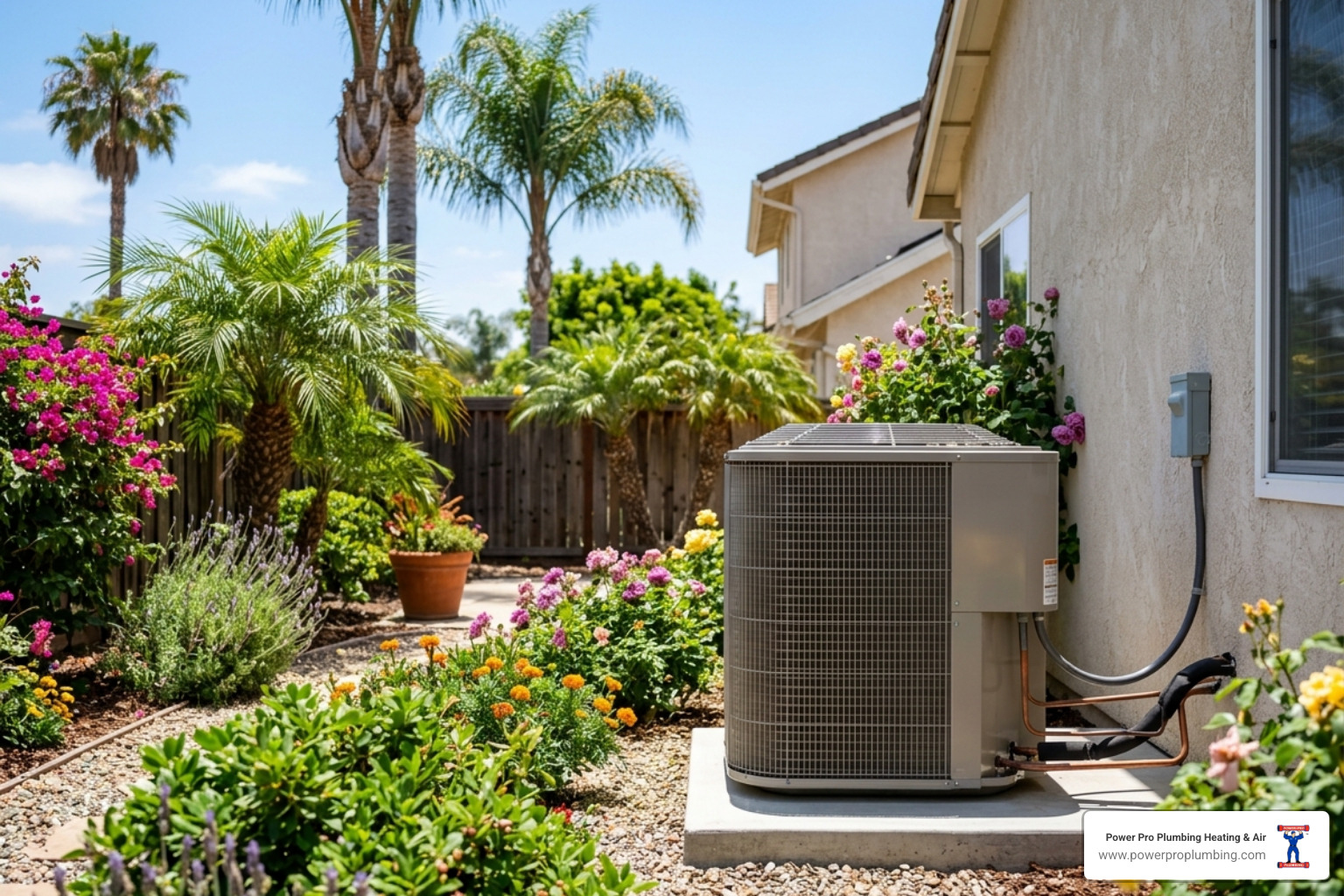
Your outdoor unit (the condenser) needs to "breathe" to release the heat it gathers from inside your home. During the winter, leaves, trash, and overgrown weeds can crowd the unit. To prepare your Cerritos HVAC for spring, clear a two-foot "no-fly zone" around the entire unit.
Trim back any bushes and remove any "dust bunnies" or spider webs clinging to the metal fins. You can use a gentle garden hose (never a pressure washer, as it can bend the delicate fins) to rinse away dirt and pollen. This simple cleaning ensures optimal airflow, which keeps the system from overworking and prevents the "short-cycling" that leads to premature wear.
Inspecting Vents and Ductwork
Inside the home, take a walk through every room. Ensure that all supply and return vents are open and unobstructed by furniture or curtains. Closing vents in unused rooms is actually a myth; it increases the pressure in your ductwork and can lead to leaks or blower motor failure.
While you are at the vents, look for excessive dust buildup, which might indicate it's time for a professional duct cleaning. Also, if you have access to your attic or crawlspace, perform a visual leak inspection. Look for disconnected sections or holes. Since the average forced-air system loses 20% to 30% of its air to duct leakage, sealing these gaps with foil-backed tape can make a massive difference in your comfort.
| Filter Type | Efficiency | Best For | Replacement Frequency |
|---|---|---|---|
| Standard Fiberglass | Low | Basic protection | Every 30 days |
| Pleated (MERV 8-11) | Medium/High | Dust, pollen, pet dander | Every 90 days |
| High-Efficiency (MERV 13+) | Very High | Bacteria, smoke, fine particles | Every 6-12 months |
When you replace your air filter in your Long Beach home, upgrading to a pleated model is one of the easiest ways to improve your family's health.
Professional Tune-Ups: Ensuring Peak Performance for Southern California Homes
Even the handiest homeowner can't see what a NATE-certified technician sees. A professional spring ac and hvac maintenance visit is essentially a deep-dive "physical" for your cooling system. When we visit a home in Beverly Hills or Anaheim, we don't just look at the unit; we measure its vitals.
A comprehensive AC service in Los Angeles includes calibrating the blower motor, tightening all electrical connections (loose wires cause 30% of AC failures!), and cleaning the evaporator coil. The benefits of AC tune-up services are cumulative; a system that is serviced every year will far outlast one that is only touched when it breaks. We also use specialized tools to check the "superheat" and "subcooling" levels, ensuring the system is cooling at its maximum designed capacity.
When is the Best Time to Schedule Spring AC and HVAC Maintenance?
Timing is everything. We recommend scheduling your regular AC tune-up services in early spring, specifically during March or April.
Why the rush? By late May, when the first heat wave hits the Inland Empire or the San Fernando Valley, HVAC companies get flooded with emergency calls. Scheduling early means you get your choice of appointment times, and you avoid the 2-to-4-week wait times that often happen in peak summer. Being proactive ensures your home is "summer-ready" before you actually need to flip the switch.
The Role of Refrigerant and Component Testing
One of the most critical parts of a professional visit is checking refrigerant levels. Refrigerant doesn't get "used up" like gas in a car; if it's low, you have a leak. Operating a system with low refrigerant causes the compressor to work harder and run hotter, eventually leading to a total system meltdown.
With the ongoing phase-out of older refrigerants like R-22 (Freon), it’s more important than ever to have a pro check for leaks. If your older system is leaking, we can help you weigh the options between a regular HVAC repair and a more modern, eco-friendly upgrade. We also test capacitors—the "batteries" that help your motors start—because these often fail during the first hot week of the year.
Improving Efficiency and Lowering Utility Bills This Season
In April 2026, energy costs are on everyone's mind. Beyond basic maintenance, there are several upgrades that can significantly lower your monthly bills. Upgrading to a smart thermostat is a game-changer. These devices can save you an additional 10% to 15% on cooling costs by automatically adjusting the temperature when you aren't home.
If your system is over 10-12 years old and frequently needs repairs, you might find that a replacement is actually the more frugal choice in the long run. Our AC replacement comprehensive guide helps homeowners navigate the latest high-efficiency models that can slash bills nearly in half compared to older units. For those who want total peace of mind, joining an HVAC maintenance plan ensures that these checks happen automatically every year, extending your system's lifespan by up to 5 or 10 years.
Signs Your System Needs Immediate Professional Attention
Sometimes, even with the best spring ac and hvac maintenance, a system will show signs of distress. You should call us immediately if you notice:
- Warm Air: If the air coming from the vents isn't cold, even when the thermostat is set low.
- Unusual Noises: Squealing, grinding, or banging sounds are common reasons for HVAC service calls and usually indicate a failing belt or motor.
- Frequent Cycling: If your AC turns on and off every few minutes, it’s "short-cycling," which kills efficiency.
- Strange Smells: A musty smell could mean mold in the ducts, while a burning smell indicates an electrical issue.
These are HVAC problems needing contractor help sooner rather than later to prevent a total system failure.
Frequently Asked Questions about Spring HVAC Maintenance
How often should I replace my HVAC air filter?
For most homes in the Los Angeles area, every 60 to 90 days is standard. However, if you have pets, suffer from allergies, or live in a high-pollen area like the San Gabriel Valley, you should check it every 30 days. If it looks grey or fuzzy, swap it out!
What is included in a professional AC tune-up?
A professional visit covers more than 20 points of inspection. This includes cleaning the condenser and evaporator coils, checking refrigerant pressures, testing the thermostat calibration, lubricating moving parts, tightening electrical connections, and clearing the condensate drain line. It’s a full "top-to-bottom" safety and performance check.
Can spring maintenance really lower my monthly electricity bill?
Yes! A system that is dirty or has low refrigerant can use up to 30% more energy to provide the same amount of cooling. By ensuring your system is running at peak efficiency, you are making sure every cent you spend on electricity actually goes toward cooling your home, not fighting against friction and dust.
Conclusion
At Power Pro Plumbing Heating & Air, we’ve spent years becoming the trusted local experts for homeowners from the South Bay to North Orange County. We know exactly what the Southern California climate demands of your cooling system. Whether you are in Lakewood, Huntington Beach, or West Hollywood, our licensed technicians are ready to help you get your home summer-ready.
Don't wait for the first 100-degree day to find out your AC isn't up to the task. Take care of your spring ac and hvac maintenance now so you can enjoy a stress-free, cool, and comfortable summer. Schedule your professional spring maintenance today and experience the Power Pro difference—where we treat your home like our own.